The Click: What Actually Happens When a Creator Finally Sounds Like Themselves
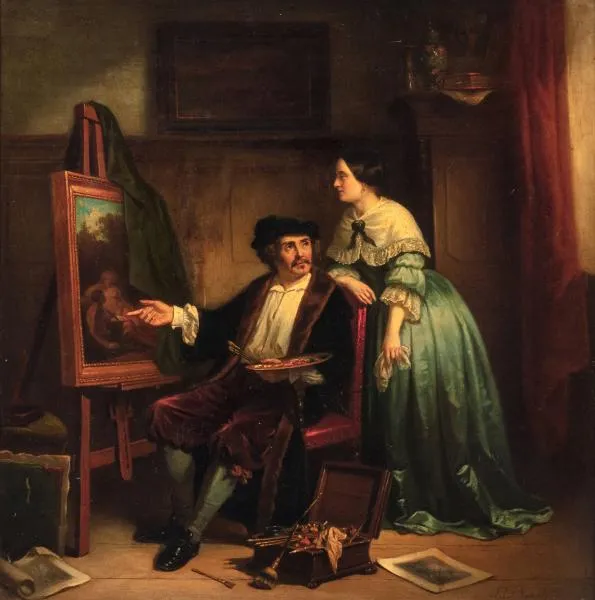
Photo: Jan Jacobus Matthijs Damschröder, Public domain, via Wikimedia Commons
There's a particular kind of silence that follows a piece of work you made entirely on your own terms. Not the nervous quiet of waiting for feedback, but something older and stranger — the recognition that whatever just came out of you didn't belong to anyone else. No borrowed cadence. No half-remembered influence. Just you, weirdly and completely.
Creators talk about this moment constantly. Painters, musicians, writers, filmmakers — they all have some version of the story. The thing that clicked. The project where something finally landed. But when you start pulling at the thread, the story gets complicated fast. Because for every artist who can name the exact day their voice arrived, there's another who says they're still not sure it has.
So what's actually happening in that moment — and does it happen all at once, or is it more like a slow tide coming in?
The Myth of the Overnight Voice
Let's start with the version that gets told most often, because it's the most seductive: the overnight revelation. The musician who writes one song and suddenly everything sounds different. The painter who makes one canvas and never goes back. These stories are real, but they're almost always missing context.
What looks like a sudden breakthrough is almost never actually sudden. What we're usually seeing is the last visible step in a very long, largely invisible process. The "click" moment tends to happen after years of repetition — after someone has internalized enough influences, made enough bad work, and gotten enough uncomfortable feedback that their instincts finally have something to work with.
Psychologists who study expertise sometimes call this the automation of skill. Once the technical mechanics of your craft stop requiring conscious attention, something else gets to come forward. Your actual sensibility. Your weird specific way of seeing. That's not inspiration — that's the reward for putting in the reps.
The overnight story is easier to tell at a dinner party. The real story involves a lot of Tuesday afternoons where nothing worked.
What Failure Actually Does
Here's the part nobody really wants to hear: failure isn't just something you survive on the way to finding your voice. It's functionally part of the process. The work that doesn't land — the songs that feel hollow, the essays that read like someone else wrote them, the paintings that look technically fine but emotionally empty — those failures are doing something.
They're narrowing the field. Every time you make something that doesn't feel right, you're collecting information about what isn't you. And that information is weirdly precise. Most artists, if you ask them, can describe their worst work in very specific terms — too derivative, too safe, too eager to please, too far outside what they actually care about. That specificity is a kind of self-knowledge, even when it feels like defeat.
Some creators find their voice early because they're willing to fail loudly and often. They put bad work out, they listen to how it lands, they adjust. Others spend years protecting themselves from that kind of exposure — workshopping endlessly, waiting until things are perfect — and end up delaying the very feedback loop that would help them figure out who they are.
There's a reason so many artists point to a specific period of prolific output — even embarrassingly prolific — as the thing that changed them. Quantity creates conditions for quality. More importantly, it creates conditions for recognition — of what you keep returning to, what you keep avoiding, what lights you up even when it's technically rough.
The Role of the Audience (Even When You Hate Them)
Here's a complicated truth: most artists discover their voice partly through other people's reactions to it. Which is uncomfortable, because there's a romantic version of artistic identity that has nothing to do with audience — the pure, solitary creator working in total isolation, indifferent to reception.
That version mostly doesn't exist. Even artists who claim total independence from audience feedback are usually responding to something — a community, a tradition, a conversation they're either joining or rejecting. Identity, creative or otherwise, tends to form in relation to something outside itself.
What separates artists who find their voice from those who stay lost isn't whether they listen to feedback — it's what kind of feedback they listen to, and how. The ones who figure it out tend to be selective. They're not chasing approval. They're listening for resonance — for the moments when someone else's reaction confirms something they already suspected about the work. That confirmation isn't about validation. It's about triangulation. It helps them locate themselves.
Feedback that just tells you what people want more of can actually work against finding your voice. Feedback that tells you what people felt — even when they can't explain why — is a different and more useful thing entirely.
Early Finders vs. Long Searchers
Some creators arrive at their signature style in their twenties. Others are still finding it in their fifties. And genuinely, both timelines produce remarkable work — so it's worth asking what actually separates them, rather than assuming early equals better.
A few patterns show up consistently. Artists who find their voice early tend to have had very early, very specific obsessions — not just general love of music or art, but fixation on particular textures, themes, or questions. That specificity gives them a head start on knowing what they care about. They also tend to have found communities or mentors early who treated their instincts as worth developing, rather than smoothing them into something more conventional.
Long searchers often have a different profile: wider early influences, more time spent mastering craft before personality could emerge, or formative experiences that pushed them toward safety over risk. Sometimes it's just circumstance — life got in the way. The search took longer, but the voice, when it arrived, was no less real.
What both groups share, almost universally, is a moment of recognition rather than invention. They didn't construct their voice. They noticed it. Something they'd been doing quietly, almost unconsciously, suddenly became legible — to themselves, to others, or both.
What the Signature Actually Is
When we talk about an artist's voice, we're really talking about a collection of consistent choices — the things they keep reaching for, the questions they keep asking, the aesthetic moves they make almost without thinking. It's not a single decision. It's a pattern that becomes visible over time.
Which means the signature is always there before the artist sees it. The voice arrives before the recognition of the voice. And maybe that's the actual answer to when artists know they've found it: not when they create something new, but when they finally see what they've been doing all along.
That's a strange kind of discovery. Less like finding something you lost and more like turning on a light in a room you've been standing in for years.
When the light comes on, the work doesn't change. But everything about how you make it does.