The Art of the Blank Space: Why the Best Creators Know Exactly When to Stop
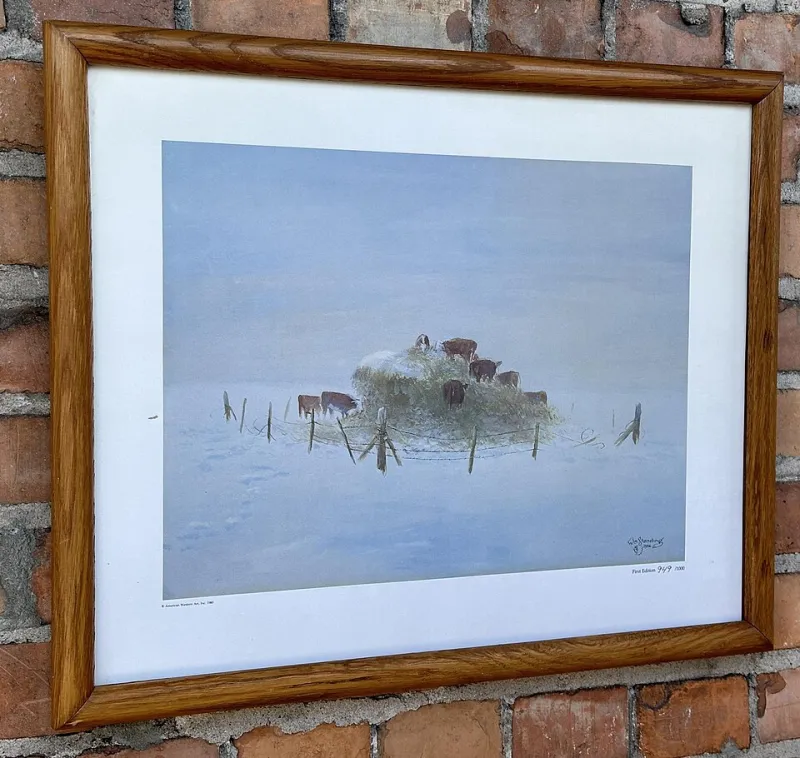
Photo: William Standing, Public domain, via Wikimedia Commons
Something strange happens when a story doesn't end where you expect it to. Your brain doesn't close the file. It keeps the tab open. You find yourself returning to a detail you almost missed, constructing explanations, arguing with strangers on Reddit at midnight about what it really meant. You're still thinking about it three years later.
That's not an accident. For a specific and growing category of creators, the blank space isn't a flaw in the work. It's the whole point.
The Difference Between Lazy and Intentional
Let's get the obvious objection out of the way first, because it's a fair one: not every unresolved storyline is a bold artistic choice. Some things are just abandoned. Some ambiguity is genuinely the result of a creator who didn't know what they were doing. Audiences have pretty good instincts for the difference, even if they can't always articulate why.
The distinction tends to come down to texture. Work that's incomplete by design usually has a density to it — details that reward revisiting, patterns that suggest a coherent logic operating just below the surface. You might not know what it means, but you feel confident that it means something. The ambiguity feels earned rather than accidental.
Compare that to the kind of open ending that leaves audiences feeling cheated. There's no texture. There's no sense that the creator knew something they chose not to share. It just... stops. The difference between those two experiences is enormous, even when the surface-level structure looks identical.
Worldbuilding Through Omission
Some of the most dedicated fanbases in contemporary culture were built not on what creators gave audiences, but on what they withheld.
Think about how Twin Peaks operated. David Lynch didn't just leave questions unanswered — he actively built a world where the unanswered questions were the architecture. The mystery wasn't a puzzle waiting to be solved. It was the texture of the place itself. Fans didn't get frustrated by the incompleteness; they moved in. They started mapping the gaps, developing theories that became as beloved as anything in the official canon.
Or look at the way Kendrick Lamar structures albums. There are threads that run through years of work, references that don't fully resolve, characters that appear and vanish. The work rewards obsessive engagement in a way that a neatly concluded narrative never could, because there's always another layer to find. The gaps are load-bearing.
In gaming, FromSoftware turned environmental ambiguity into an entire brand identity. Dark Souls tells its story almost entirely through item descriptions and architectural implication. Players don't receive the lore — they excavate it. The result is one of the most engaged and creative fanbases in the medium's history, one that has produced genuinely impressive scholarly-level analysis of fictional worlds.
The Fan as Co-Author
Here's what intentional incompleteness actually does: it changes the audience's role.
A finished, fully explained work positions the audience as a consumer. You receive the story. You evaluate it. You move on. There's nothing wrong with that — plenty of great art operates this way. But a work with deliberate gaps does something different. It positions the audience as a collaborator. You're not just receiving the story. You're completing it.
This is enormously powerful, both creatively and in terms of community building. When fans develop theories, create fan fiction, or debate interpretations, they're not just engaging with the original work — they're becoming invested in it in a way that's deeply personal. They've put something of themselves into it. That's a completely different quality of attachment than passive consumption creates.
Creators who understand this aren't just leaving blanks because they ran out of ideas. They're deliberately designing entry points for audience imagination. The blank space is an invitation.
When the Signature Is the Mystery
Some creators have taken this further, making ambiguity so central to their identity that the mystery itself becomes their brand.
Consider the way certain visual artists work — releasing pieces with no titles, no statements, no context. The absence of explanation becomes a statement. Audiences project, debate, and ultimately build communities around the act of interpretation itself. The artist's refusal to explain is as much a part of the work as anything on the canvas.
In music, artists like Frank Ocean have built entire mythologies around scarcity and silence. The gaps between releases, the cryptic visual drops, the refusal to be fully legible — these aren't failures of communication. They're a carefully maintained aesthetic. The audience's hunger is part of the experience the artist is creating.
This is different from simply being mysterious for its own sake. The creators who pull it off tend to have a clear internal logic, even if they never share it publicly. The work coheres, even when it doesn't explain itself. That internal coherence is what separates compelling ambiguity from noise.
The Risk Hiding Inside the Strategy
It would be dishonest to talk about this without acknowledging the real danger. Intentional incompleteness can go wrong in a few specific ways.
The biggest one: when a creator leans so hard into ambiguity that the audience loses trust in the underlying logic. If fans start to suspect there isn't a coherent system beneath the mystery — that the gaps are actually just gaps — the spell breaks fast. And it tends to break loudly. The same obsessive energy that built the community can turn corrosive when audiences feel like they were strung along.
There's also the question of timing. A blank space that feels generative in year one can feel frustrating by year five if there's no sense of momentum. The creators who sustain long-term engagement through incompleteness tend to be the ones who drop just enough — a new detail, an unexpected connection, a small confirmation — to keep the sense of discovery alive without closing everything down.
Leaving the Door Open
What's actually happening when a creator chooses to stop before the period? They're making a bet on their audience. They're saying: I trust you to bring something to this. I think you're curious enough, creative enough, and invested enough to meet me in the space I've left open.
When that bet pays off, it produces some of the most durable creative relationships in the culture. The work doesn't just get consumed. It gets inhabited. Fans build inside it, argue about it, return to it years later with new eyes.
That's the signature move of a creator who understands something fundamental: the imagination you spark in someone else is part of your work. The blank space isn't where the art ends. Sometimes, it's exactly where it begins.