Leave Them Wanting More: How Creators Are Turning Incompleteness Into an Act of Love
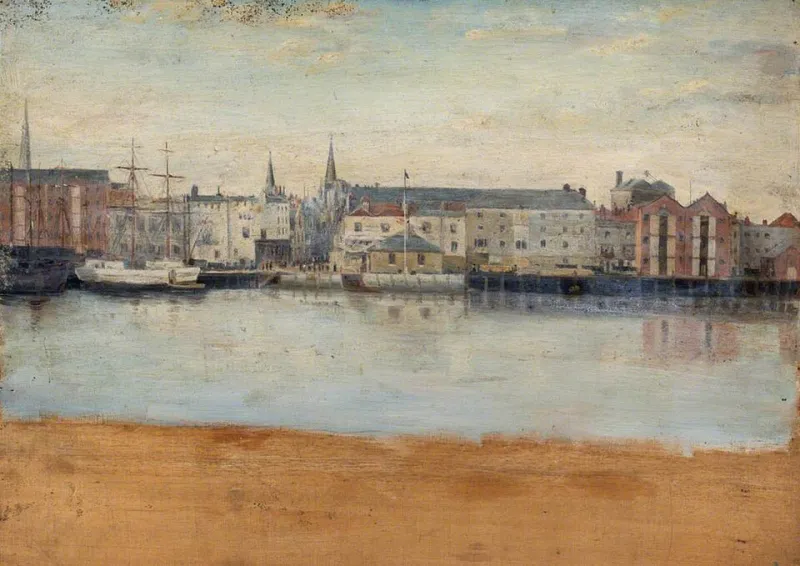
Photo: anonymous , Public domain, via Wikimedia Commons
There's a particular kind of discomfort that lives at the end of a chapter that doesn't quite close. You know the feeling — you set down your phone or close the browser tab and just sit there, a little unsettled, your brain still chewing on something the creator left dangling. Most people assume that's a bug. Increasingly, it's a feature.
Across mediums — serialized fiction, visual art, podcast storytelling, even music — a growing number of creators are making a deliberate choice to leave things unfinished. Not because they ran out of time or ideas, but because the gap itself is the gift.
The Psychology of the Open Door
Human brains are completion machines. We are wired, almost embarrassingly so, to close loops. Psychologists call it the Zeigarnik effect — the tendency to remember and fixate on unfinished tasks more than completed ones. Advertisers have exploited this for decades. But creators are doing something different with it. They're not using incompleteness to manipulate attention spans. They're using it to invite participation.
When a visual artist releases a piece where the central figure's face is obscured, or a serialized writer ends a chapter mid-conversation, they're not just building suspense. They're extending a specific kind of trust to the audience: I believe your imagination is good enough to live here for a while. That's not nothing. In a media landscape that often treats audiences like passive consumers to be entertained and moved along, being handed an unfinished thing feels almost radical.
And audiences feel it. There's a reason fan communities explode around stories with ambiguous endings more than tidy ones. There's a reason the most discussed albums are the ones where a lyric refuses to mean just one thing. Incompleteness creates a vacuum, and people fill it with themselves.
The Intimacy Paradox
Here's the weird part: being left with a question can feel more personal than being given an answer.
Think about the difference between a creator who delivers a perfectly packaged, fully explained narrative versus one who leaves you with a scene that trails off into silence. The first one is generous, sure. But the second one requires something from you. It asks you to meet the work halfway. And in that act of meeting — in the space where your interpretation lives — something like a relationship forms.
This is what some creators seem to understand intuitively. The audience that has to complete something is the audience that owns something. They carry a version of the work inside them that is partially theirs. That's not a parasocial illusion — it's a real creative exchange, even if it only flows one direction.
Serial visual artists who drop ongoing illustration series without resolution, indie game developers who leave lore deliberately fragmented, Substack writers who end essays with questions instead of conclusions — they're all working the same nerve. The incompleteness signals: this story isn't over, and neither is our conversation.
When Ambiguity Becomes Architecture
There's a difference between incompleteness that frustrates and incompleteness that fascinates, and the best creators know exactly where that line is.
The key seems to be intention. An open ending that feels careless — where the creator clearly didn't think through the implications — lands differently than one that feels chosen. Audiences are remarkably good at detecting the difference. When a cliffhanger feels deliberate, there's a kind of trust established. When it feels accidental, it just feels like being abandoned.
The creators who do this well tend to leave breadcrumbs. Not answers, but texture — enough detail that the imagination has material to work with, enough coherence that the gap feels meaningful rather than random. It's architecture, not absence. The blank space is load-bearing.
Some of the most devoted fan communities online have formed specifically around works that operate this way. Discord servers dedicated to dissecting a single ambiguous image. Reddit threads that have run for years trying to decode a piece of lore that the creator has never officially explained. These aren't just fan bases — they're collaborative interpretation projects, and the creator's original incomplete work is the seed that started them.
The Creator's Calculated Vulnerability
There's also something worth acknowledging about what it takes for a creator to not finish something publicly. In a culture that rewards polish and completion — where the finished product is the thing that gets clicks and shares and algorithm love — choosing to release something deliberately open is a small act of courage.
It means trusting that the audience won't mistake incompleteness for incompetence. It means being okay with not controlling the interpretation. It means accepting that some people will be frustrated, even annoyed. Not every creator is wired for that kind of exposure.
But the ones who pull it off often talk about it in terms that sound less like strategy and more like vulnerability. Leaving something unresolved is, in a way, admitting that the work doesn't belong entirely to you anymore. The moment it leaves your hands with its edges still rough, it becomes partially the audience's to complete. That's a real handoff. That's intimacy with stakes.
What This Means for How We Engage With Creative Work
If you've ever found yourself obsessing over a story that didn't give you closure, or staring at a piece of visual art trying to decode what's just outside the frame, you've already been on the receiving end of this. And if it felt like a deeper connection than the neatly-wrapped things you consumed before it, that's not an accident.
The creators who are leaning into deliberate incompleteness are making a bet on their audience's imagination — and more often than not, that bet is paying off in the form of communities that don't just follow, but actively participate. The story isn't finished because it was never supposed to be finished alone.
There's something kind of beautiful about that, honestly. In a world absolutely drowning in content, the unfinished canvas might be the most generous thing a creator can offer. It says: I left room for you. Come find it.