Rough Edges, Real Power: Why Incomplete Art Hits Harder Than Anything Polished
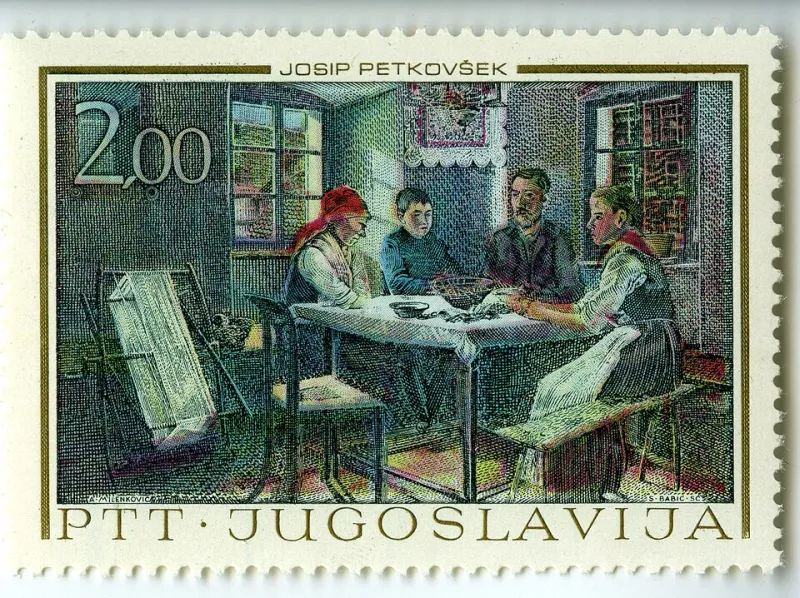
Photo: Unknown authorUnknown author, Public domain, via Wikimedia Commons
There's a version of creativity we've all been sold — the one where the work isn't real until it's done. Polished. Delivered. Signed off on. We treat completion like a moral virtue, as if leaving something unfinished is a kind of failure, a lack of follow-through, a broken promise to the audience.
But what if that's completely backwards?
Across music, visual art, literature, and even film, a growing number of creators are making a quiet, defiant argument: that the rough edge, the open wound, the deliberately unresolved ending — these aren't signs of something missing. They're the whole point.
The Demo That Became the Definitive Version
Let's start with music, because it's where this tension shows up most visibly. Think about the demo recordings that fans have elevated to near-mythological status — Elliott Smith's four-track bedroom recordings, Sufjan Stevens's early sketches, even the raw first pass of certain tracks that leaked and became more beloved than the official release. There's something in the hiss of the tape, the slightly off-key vocal take that wasn't fixed, the piano note that rings a little too long. It feels inhabited. Like you caught the artist in the middle of thinking.
Producers spend months chasing a sound that sounds effortless. Meanwhile, the demo — recorded in a few hours with minimal gear — already has it. The incompleteness is the intimacy.
Artists like Frank Ocean have leaned into this deliberately. When Blonde dropped without conventional structure, without radio-ready hooks, without the neat bow of a mainstream pop album, critics initially stumbled. But listeners felt something different: like they were being let into a space that hadn't been curated for public consumption. The rawness wasn't accidental. It was architectural.
Paint That Never Dried
Visual art has its own long, complicated relationship with incompleteness. Michelangelo's Prisoners — a series of marble sculptures where figures appear to be literally emerging from stone, never fully carved free — have fascinated viewers for centuries. Were they unfinished? Probably. Does that make them less powerful? Absolutely not. Many art historians argue the opposite: that the visible struggle, the stone still clinging to the form, makes the work more emotionally raw than any fully realized statue could be.
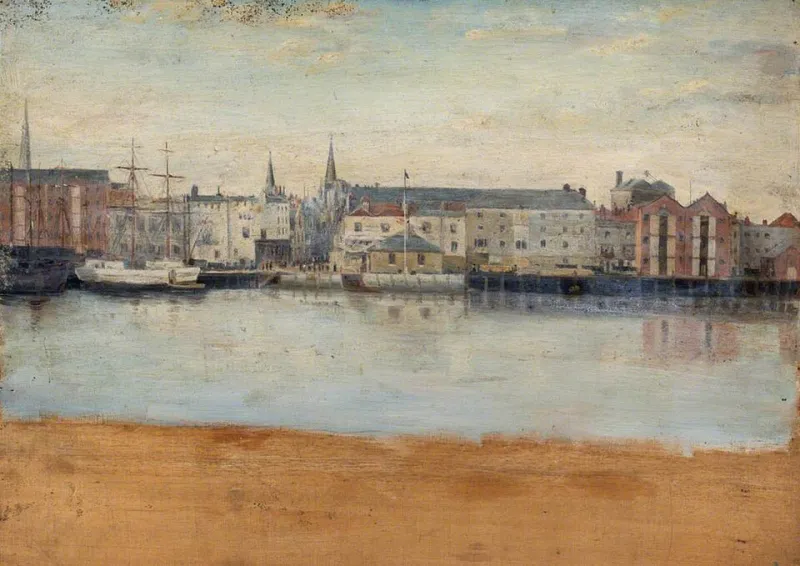
Cézanne left dozens of canvases with unpainted sections, bare white ground showing through. He reportedly said he didn't know how to finish them. Scholars have spent generations arguing whether those gaps are failures or masterstrokes. The audience keeps returning either way.
Contemporary artists are making this choice more consciously. Painters like Cecily Brown and Neo Rauch build works that feel mid-process — compositions that seem to be happening rather than having happened. The viewer's eye has nowhere to fully rest. You're always slightly off-balance, slightly searching. That feeling? That's not a flaw in the experience. That is the experience.
Why Our Brains Love the Unresolved
There's actual psychology behind why incomplete things stick with us. The Zeigarnik Effect — named after Soviet psychologist Bluma Zeigarnik — describes how humans remember interrupted or unfinished tasks far better than completed ones. Our brains treat open loops as unfinished business, keeping them active in working memory long after we've moved on.
Apply that to art and it gets interesting fast. A story that wraps up cleanly gives your brain permission to close the file. A story that ends mid-breath, or a painting where the background fades into nothing, or a song that cuts out before the final resolution — those stay open. They keep running. They become part of how you think, not just something you consumed.
Creators who understand this are essentially building a kind of cognitive hook. Not a manipulative one — more like an invitation. You finish it. Bring yourself to this thing and make it whole.
The Culture of Polish Is Getting Tired
Here's the uncomfortable cultural context: we live in an era of insane production quality. Streaming has raised the baseline so high that a mid-budget music video from five years ago looks like it was shot on a flip phone by comparison. AI tools can smooth out any rough edge, auto-tune any note, generate any visual. The capacity for perfection has never been more accessible.
And audiences are exhausted by it.
There's a reason lo-fi aesthetics keep cycling back into fashion. A reason why film photography is having a moment even though digital is objectively more precise. A reason why handwritten notes feel more meaningful than a perfectly formatted email. The human error, the texture, the evidence that something was made by a person — that's become rare enough to be precious.
Incompleteness signals humanity. It says: this wasn't optimized for you. This was made by someone who ran out of something — time, certainty, resolution — and let you see it anyway. In a content landscape built around maximum polish, that kind of vulnerability reads as radical.
When Leaving It Alone Is the Bravest Choice
There's also something to be said about the courage it takes to release something unfinished. Every creator knows the feeling of wanting one more pass, one more revision, one more chance to get it right. Letting go before that happens — intentionally, as a statement — requires a different kind of confidence than perfectionism does.
It says: I trust this enough as it is. I trust you enough to meet it where it lives.
Some of the most enduring creative signatures in American culture are built on exactly this kind of restraint. Toni Morrison leaving certain silences in her prose that no amount of explanation could improve. Jean-Michel Basquiat's paintings that feel furious and uncontained, words crossed out but still legible, images layered and half-obscured. These aren't artists who didn't know when to stop. They knew precisely when to stop. They just stopped somewhere different than convention expected.
What This Means for How We Receive Art
Maybe the real shift isn't just in how creators make things — it's in how we've been trained to receive them. We've been conditioned to evaluate art by how finished it looks, how coherent it feels, how neatly it delivers on its premise. But that framework misses something essential about what art actually does.
The works that change us aren't always the ones that answer every question. Sometimes they're the ones that hand us the question and walk away. The canvas with the empty corner. The album that fades out mid-sentence. The novel that ends before the character arrives.
That space — that deliberate, chosen incompleteness — is where imagination gets to sign its name.
And maybe that's always been the whole point.