Your Style Is the Product: The Uncomfortable Truth About AI and Creative DNA
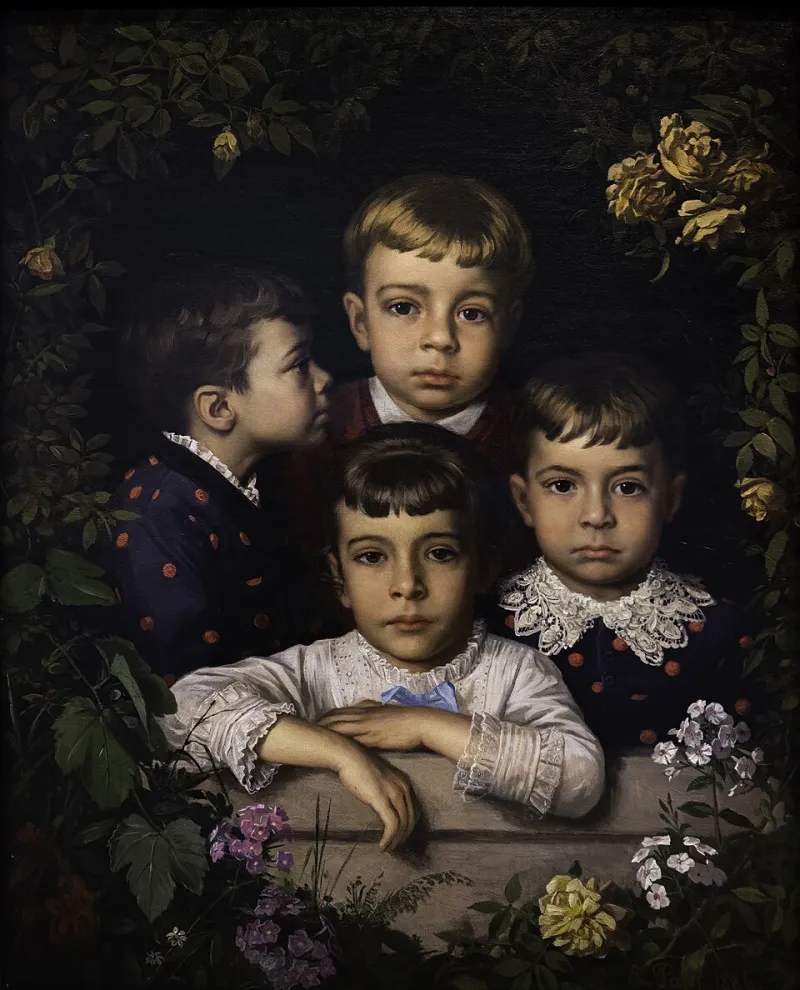
Photo: Karl Ernst Papf, Public domain, via Wikimedia Commons
There's a specific kind of vertigo that hits when you see your own handwriting on a letter you never wrote. Artists across the US have been describing something uncomfortably close to that feeling — scrolling through AI-generated images and recognizing a brushstroke, a color palette, a compositional instinct that feels deeply, unmistakably theirs. Not stolen outright. Something stranger. Absorbed.
Generative AI tools like Midjourney, Stable Diffusion, and DALL-E didn't develop their visual vocabularies in a vacuum. They were trained on billions of images scraped from the internet — portfolios, social media posts, print archives, fan art communities. The creative signatures that artists spent years, sometimes decades, developing became raw fuel for a machine that now mimics them on demand.
And that's where it gets thorny.
What a Creative Signature Actually Is
Before we talk about theft, it helps to understand what's actually at stake. A creative signature isn't just a style — it's a record of lived experience. The way a particular illustrator renders light through fabric tells you something about how they see the world. The recurring color tension in a painter's work might trace back to a formative obsession or a specific emotional period. These aren't aesthetic choices made in isolation. They're the residue of a person's entire relationship with their craft.
When fans or clients commission work from a specific creator, they're not just buying a product. They're buying access to that accumulated perspective. It's personal in a way that's genuinely difficult to commodify — until now.
AI systems can't replicate the source of a signature. But they can replicate its surface with unnerving precision. And for many working artists, that distinction doesn't feel meaningful when they're watching clients cancel commissions because "the AI can do it for free."
The Legal Gray Zone Nobody Wants to Map
Here's the thing about the current legal landscape: it was never built for this. US copyright law protects specific works, not styles. You can copyright a painting. You cannot copyright the way you paint clouds. That gap — wide enough to drive a data center through — is exactly where AI companies have been operating.
Several high-profile lawsuits have attempted to challenge this. Artists including Sarah Andersen, Kelly McKernan, and Karla Ortiz filed suit against Stability AI and Midjourney in 2023, arguing that training on their work without consent constitutes infringement. The cases are still grinding through the courts, and legal scholars are genuinely divided on the outcome.
What's less divided is the ethical conversation happening outside courtrooms. Even if training on publicly accessible images is technically legal, many in the creative community argue that "technically legal" and "actually okay" are two very different bars. The fact that an artist posted their work online doesn't mean they consented to it becoming training data for a commercial product that directly competes with their livelihood.
Some AI companies have started offering opt-out registries — places where artists can request their work be excluded from future training sets. Critics point out that this inverts the reasonable expectation of consent. You shouldn't have to opt out of something you never opted into.
The Emotional Weight of Being Replicated
The legal arguments matter. But artists who've been through this experience will tell you the legal dimension is almost secondary to the psychological one.
Imagine spending fifteen years developing a visual language that is genuinely, recognizably you. Clients find you because of it. Your community knows your work on sight. That signature is your livelihood, yes, but it's also your identity as a creator. Then one day, someone types a prompt into a text box — "in the style of [your name]" — and out pops something that wears your aesthetic like a costume.
Several illustrators have described the experience as a kind of creative uncanny valley. It's not flattery. It's closer to finding out a stranger has been studying your mannerisms and performing them at parties without you. The imitation is close enough to be recognizable, but hollow in a way that's hard to articulate.
For emerging artists especially, the damage runs deeper. Part of how you build a fanbase and a career is by being distinctive — by developing a signature that cuts through the noise. If AI tools can approximate that signature instantly, the competitive moat that creativity used to provide starts to feel a lot less secure.
The Resistance Is Getting Organized
Artists haven't just been venting online — they've been building infrastructure. Tools like Glaze and Nightshade, developed by researchers at the University of Chicago, work by subtly altering image data in ways that are invisible to the human eye but confuse AI training algorithms. Glaze essentially scrambles the style signal that AI systems try to extract. Nightshade goes further, poisoning training data so that models trained on protected images learn distorted associations.
Adoption has been significant. Within weeks of Nightshade's release, hundreds of thousands of artists had downloaded it. It's an imperfect solution — it doesn't address work already absorbed into existing models — but it represents something important: creators actively asserting that their work is not a public resource.
Beyond technical tools, advocacy organizations like the Artists Rights Alliance have been pushing for legislative protections, and some US lawmakers have started paying attention. The conversation is moving slowly, but it is moving.
Will AI Ever Find Its Own Voice?
There's a question worth sitting with here: can a system trained entirely on human creativity ever develop something genuinely its own? Or is it structurally incapable of anything beyond sophisticated recombination?
Right now, the honest answer is that generative AI doesn't create — it interpolates. It finds patterns in what already exists and produces outputs that sit statistically close to those patterns. That's impressive engineering. It is not, by most meaningful definitions, an original voice.
The irony is that the thing that makes human creative work valuable — the fact that it comes from somewhere, that it carries the weight of a specific person's experience and choices — is precisely what AI cannot replicate, no matter how many images it trains on. It can wear the costume. It cannot wear the skin.
For artists navigating this moment, that might be cold comfort when clients are leaving and income is dropping. But it also points toward something real: there will always be an audience that can tell the difference, that wants the authentic version, that values the signature precisely because it belongs to someone.
The question is whether the industry, the legal system, and the platforms that host creative work will build enough support around those creators to let them survive long enough to matter.