Why Your Favorite Artists Are Impossible to Mistake: The Hidden Science of a Creative Signature
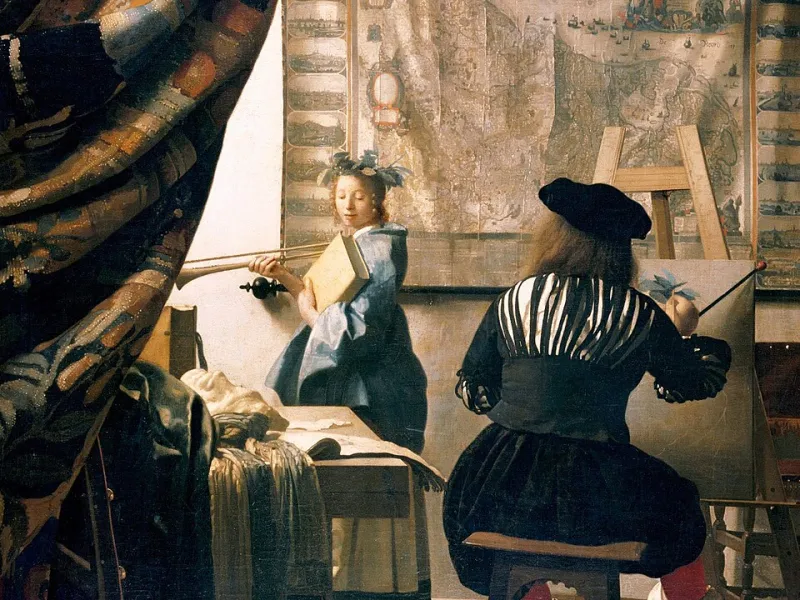
Photo: Johannes Vermeer, Public domain, via Wikimedia Commons
There's a moment every devoted fan knows — you scroll past a piece of art, hear three seconds of a song, or catch a frame of animation, and before your brain fully processes what you're looking at, something clicks. That's them. No caption needed. No watermark required. You just know.
That recognition isn't magic, even if it feels like it. It's the product of something artists spend years — sometimes accidentally — building. Call it a visual voice, a creative fingerprint, or just a vibe so specific it becomes its own brand. Whatever you call it, it's one of the most valuable things any creator can develop. And understanding how it forms might just change how you think about your own work.
The Myth of the "Natural" Style
Let's get one thing out of the way first: almost no one is born with a fully-formed aesthetic. The artists whose work feels the most effortlessly distinctive usually got there through an embarrassing amount of trial, error, and straight-up copying before the pieces fell into place.
Concept artist Karla Ortega, who has worked on indie game projects across the Pacific Northwest, puts it plainly: "I spent my first three years trying to draw like everyone I admired. One day I looked at my sketchbook and realized the pages where I'd gotten lazy or rushed — where I stopped trying to imitate — were the ones that actually looked like me."
That's a pattern you hear over and over. Authenticity often sneaks in through the back door, during the moments when a creator stops performing and starts just... making. The pressure to produce something polished gets lifted, and what's underneath turns out to be the real thing.
Constraints Are the Canvas
Here's something counterintuitive: limitation is one of the most powerful engines of a recognizable style. Think about lo-fi hip hop producers who built entire sonic worlds out of deliberately degraded samples and dusty drum machines. Or illustrators who work in a restricted color palette not because they have to, but because it forces their compositions to carry more weight.
When you can't rely on infinite options, you develop workarounds. Those workarounds become habits. Those habits become signatures.
Digital painter Marcus Webb, whose surreal portraiture has built him a serious following on social media, describes his signature muted-neon contrast as "a happy accident from an old monitor that blew out my colors." He corrected the problem when he upgraded his setup — and then immediately recreated it on purpose because the work felt hollow without it. "That broken screen taught me something about what I actually liked," he said. "I just needed it to break first."
The Psychology of Why We Crave It
From the audience side, the pull toward recognizable creative voices isn't just about preference. It's about trust.
Psychological research on aesthetic experience consistently shows that humans connect more deeply with art when they sense a coherent personality behind it. It's the same reason we follow certain writers or directors rather than just genres — we're not just buying the product, we're buying into the worldview. A distinctive style signals consistency, which signals authenticity, which signals that there's a real human making intentional choices rather than a content machine optimizing for engagement.
In a media landscape where AI-generated imagery and trend-chasing content flood every platform, that authenticity premium is only going up. Audiences are getting better at detecting when something was made for them versus made at them. A genuine creative signature is the clearest way to communicate which side you're on.
The Trap Nobody Talks About: Style as a Cage
Of course, there's a shadow side to all of this. Once you've built a recognizable aesthetic, it can start to feel like a cage. Your audience expects a certain thing. Deviating feels risky. And so artists who spent years finding their voice sometimes find themselves performing it long after it stopped feeling true.
This is where the conversation about creative signatures gets genuinely complicated. The goal was never to find one look and repeat it forever — it was to develop such a deep understanding of why you make choices that you can evolve without losing the thread.
Musicians navigate this better than most visual artists, maybe because albums create natural checkpoints for reinvention. Think about how someone like Billie Eilish or Tyler, the Creator shifts sonically between projects while still being unmistakably themselves. The signature isn't the specific sound — it's the underlying sensibility, the particular way they see and process the world.
Visual artists can do the same thing. The question isn't "what does my style look like" — it's "what do I always come back to, no matter the medium or the project?"
Building Something Real Without Losing Yourself
So what does this mean practically for emerging creators trying to develop their own voice without either imitating their heroes or chasing whatever's trending on social this week?
A few things seem to hold true across disciplines:
Go back to your obsessions. Not your aesthetic inspirations — your actual obsessions. The things you find yourself drawing, writing about, or referencing even when they're not relevant. Those patterns are telling you something.
Make more than you show. The work that builds your style often isn't the work you post. It's the sketchbook pages, the rough mixes, the drafts you delete. Give yourself space to be genuinely experimental where there's no audience pressure.
Pay attention to what feels wrong. When you produce something that technically works but feels hollow to you, that discomfort is data. It's your sensibility pushing back against something that doesn't fit.
Let the accidents stay. Some of the most distinctive creative choices started as mistakes that someone was too curious — or too attached — to fix.
At Marive Kai, we've watched a lot of creative voices emerge over the years, and the ones that stick aren't always the most technically impressive or the most algorithmically optimized. They're the ones that feel like they couldn't have come from anyone else. That's not a formula. But it's also not a mystery — it's the result of someone paying close enough attention to their own instincts that those instincts start to show up in the work.
And once they do, audiences notice. Every time.