Hide to Find Yourself: How Going Anonymous Unlocks the Creativity You've Been Sitting On
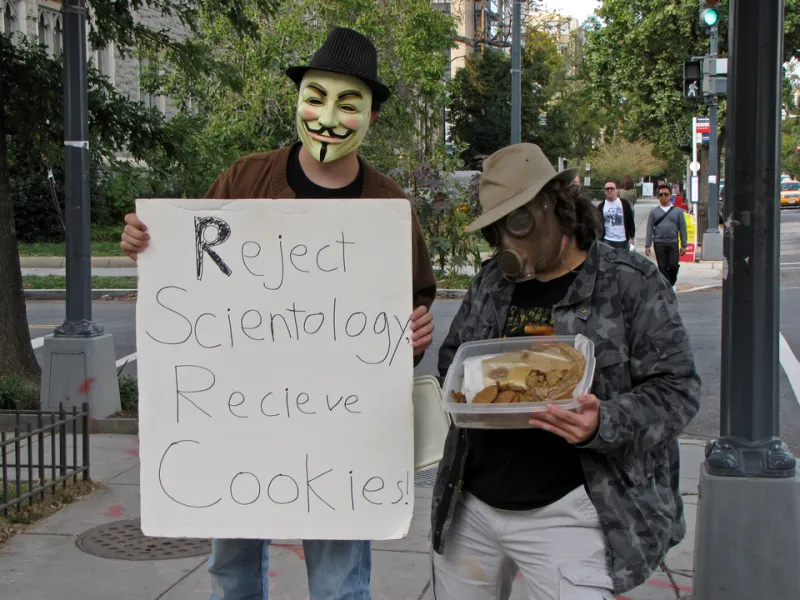
Photo: Ben Schumin from Montgomery Village, Maryland, USA, CC BY-SA 2.0, via Wikimedia Commons
There's a strange thing that happens when nobody knows your name. The pressure lifts. The internal editor — the one that sounds suspiciously like your follower count — goes quiet. And suddenly, you're making stuff you actually care about.
In an era where every creator is told to build a brand, grow an audience, and plaster their face across every platform, a quiet rebellion is taking shape. Some of the most interesting creative work circulating right now comes from people who have deliberately made themselves invisible. Pseudonyms, alternate accounts, unnamed Tumblr archives, anonymous SoundCloud drops — the tools of obscurity are old, but the reasons people are reaching for them feel very new.
The Brand Trap Nobody Talks About
Here's the uncomfortable truth about building a public creative identity: the bigger it gets, the more it starts to own you. You become associated with a particular aesthetic, a tone, a type of content. Your audience expects the next thing to look like the last thing. And somewhere in that feedback loop, actual experimentation starts to feel dangerous.
Creators who've spent years building recognizable names describe a specific kind of creative paralysis — the fear that trying something genuinely different will read as a misstep rather than growth. The algorithm rewards consistency. Audiences, even loving ones, can punish deviation. So the bold move, the weird idea, the project that doesn't fit the brand — it sits in a draft folder forever.
Going anonymous breaks that cycle completely. There's no reputation to protect because there's no reputation at all. You're starting from zero, which turns out to feel a lot like freedom.
The Long History of Hiding in Plain Sight
This isn't a new phenomenon — it just has new tools. Writers have used pen names for centuries, often to shed gender expectations or class associations that would have colored how their work was received. Samuel Clemens became Mark Twain. Mary Ann Evans became George Eliot. The pseudonym wasn't just a mask; it was a permission slip.
In music, the tradition runs just as deep. Artists from Prince to Beyoncé have released work under alternate identities to sidestep expectation. Gorillaz built an entire fictional band to let Damon Albarn make music that wouldn't have fit under his own name. Even in the internet age, artists like Burial spent years releasing critically acclaimed electronic music while keeping their identity completely hidden — and the mystery became part of the art itself.
What's different now is scale. The tools for building and hiding an identity are available to anyone with a phone and a free account. And a growing number of everyday creators — not just established names — are using that access to do something genuinely interesting.
What Happens When Nobody's Watching
Talk to creators who've run anonymous side projects and a pattern emerges. The work is almost always stranger, more personal, and more risky than what they publish under their real names. One illustrator describes an anonymous Instagram account where she posts work she'd never attach to her professional portfolio — experimental, unfinished, sometimes deliberately ugly. The account has a few hundred followers and zero pressure. She calls it the most honest creative space she has.
A musician who releases polished indie pop under his own name maintains an anonymous Bandcamp page where he posts ambient soundscapes that take weeks to make and don't follow any conventional structure. He's not trying to build an audience for it. He's using it to stay sane.
This is the paradox at the heart of the anonymous creativity movement: by becoming less recognizable, these artists are becoming more themselves. The work that comes out of the hidden space is often the truest reflection of what they actually find interesting — uncurated by audience response, unfiltered by brand logic.
The Breakthrough That Starts in the Shadows
There's also a practical argument for anonymity that goes beyond personal liberation. Some of the most striking creative breakthroughs in recent memory started as anonymous or pseudonymous experiments that only later got attached to a real identity.
The artist who built a small, devoted following under an obscure username before anyone knew who they were had the advantage of developing their voice without the distortion of early fame. By the time the name got revealed — if it ever did — the work was already fully formed. The signature was already there. The audience that found it found it because of the work itself, not because of who made it.
That's a fundamentally different kind of connection than the one built through algorithmic promotion and platform branding. It's slower and smaller, but it tends to run deeper.
The Enigma as Artistic Statement
Some creators have taken this further, building the mystery itself into the work. The anonymous identity isn't just a shield — it's a creative choice that changes how the audience experiences everything. When you don't know who made something, you're forced to sit with the work alone. You can't outsource your interpretation to a biography or a brand story. You just have to feel it.
This is something Marive Kai has always understood about creative identity — that the signature doesn't have to be a name. It can be a texture, a recurring theme, an unmistakable way of seeing the world. The most powerful creative signatures often operate below the level of conscious recognition. You know the work when you encounter it, even if you couldn't explain exactly why.
Anonymity, at its best, forces that kind of attention. It strips away the metadata and leaves only the thing itself.
Should You Try It?
If you're a creator who's been feeling boxed in by your own brand — or who has ideas that don't fit anywhere in your current output — the answer might genuinely be yes. Start a new account with a name that means nothing. Post the weird thing. Finish the project that doesn't make sense for your audience.
You don't have to reveal it. You don't have to build it into anything. The point isn't to manufacture a mysterious alter ego for marketing purposes — that's just branding with extra steps. The point is to make a space where the only audience that matters is you, and to see what you make when you're not performing for anyone else.
The algorithm doesn't know your name in that space. And it turns out that's exactly the point.
Some of the most alive creative work being made right now exists in the margins, unsigned and untracked. The people making it aren't hiding because they're afraid. They're hiding because they finally figured out that visibility and authenticity don't always move in the same direction — and sometimes the most honest thing you can do is disappear.