One Person, One Vision, One Million Devoted Fans: The Rise of the Solo Entertainment Empire
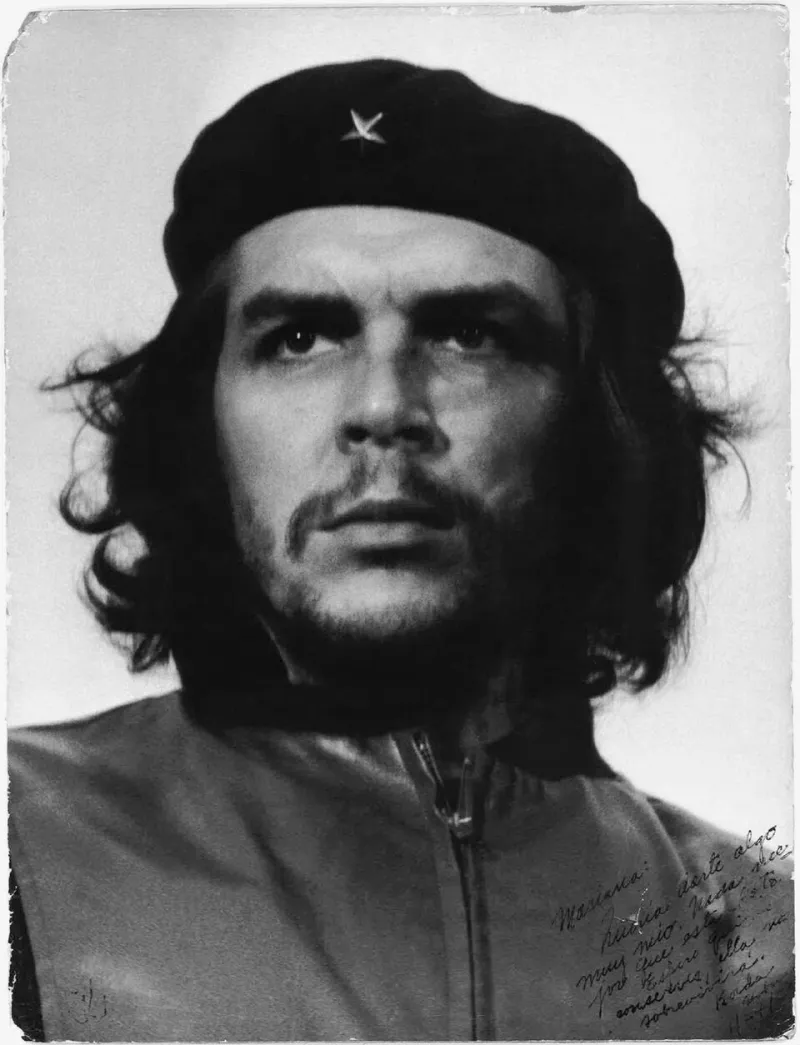
Photo: Alberto Korda, Public domain, via Wikimedia Commons
Somewhere in a home studio — maybe a spare bedroom, maybe a converted closet with acoustic foam stapled to the walls — someone is single-handedly building the next big thing in entertainment. No writers' room. No development executives. No committee sign-offs. Just one person, their tools, and an audience that has decided, collectively and enthusiastically, to show up for whatever they make next.
This isn't a niche phenomenon anymore. It's a genuine shift in how entertainment gets made, distributed, and consumed in America.
The Numbers Don't Lie
Let's start with the part that still feels a little unreal. Toby Fox wrote, composed, and largely programmed Undertale by himself. It has sold over a million copies and spawned a fandom that produces an almost incomprehensible volume of fan art, theory content, cosplay, and music covers years after its release. Eric Barone — known online as ConcernedApe — built Stardew Valley solo over four years. It has moved over 30 million copies and has an active, deeply affectionate community that treats him less like a developer and more like a friend.
In the VTuber space, individual creators operating under virtual personas have built subscriber counts in the millions, with fan communities that organize watch parties, fund charity drives, and create elaborate lore around their favorite creators' fictional worlds. Some of the most-watched live streams on Twitch on any given weekend belong to solo operators who couldn't tell you what a content strategy deck looks like.
The common thread isn't genre, platform, or format. It's singularity.
Why a Single Voice Cuts Through
There's a reason fans can feel the difference between something made by a committee and something made by a person. It's not just quality — plenty of well-funded studio productions are technically excellent. It's coherence. When one person makes every decision, the work carries a consistent internal logic. Every choice reflects the same sensibility. The humor, the aesthetics, the emotional beats, the weird tangents — they all come from the same place.
Audiences, especially younger ones who have grown up consuming creator content, have developed a finely tuned sense for this. They can feel when something is trying to appeal to them versus when something is genuinely expressing something. The former reads as product. The latter reads as personality.
And personality is what builds parasocial connection — which is, whether we're comfortable with it or not, the engine that drives modern fandom.
The Parasocial Factor
Parasocial relationships get a bad reputation, and sometimes deservedly so. But at their healthiest, they represent something genuinely meaningful: a sense of familiarity and loyalty that audiences develop toward creators who let them in. Solo creators are structurally better positioned to foster this than studios, because there's no PR layer, no brand management team, no corporate voice softening the edges.
When a solo creator streams for six hours, forgets to eat, and gets genuinely frustrated trying to solve a puzzle, that's real. When they post a development update at 1 a.m. because they couldn't sleep and wanted to share something they figured out, that's real. When they interact directly with fan comments and remember a longtime supporter's username, that's real in a way that a studio's social media intern managing a franchise account simply cannot be.
Fans aren't stupid. They know the difference. And the ones who find a creator who feels genuinely accessible become some of the most devoted audiences in entertainment — not in spite of the intimacy but because of it.
What They Give Up
It would be dishonest to frame solo creation as pure upside. The model extracts serious costs, and the creators who've made it work are often remarkably candid about that.
Burnout is endemic. When you are the writer, the artist, the developer, the community manager, the accountant, and the public face of your own creative project, the work never actually stops. Several prominent solo creators have taken extended hiatuses, not because they lost interest, but because they ran out of capacity. The audience that loves them also needs them constantly, and that tension is genuinely hard to navigate.
There's also the vulnerability of being the single point of failure. If a solo creator gets sick, burned out, or simply changes direction, the entire project stalls. A studio can absorb the departure of a key creative. A one-person operation cannot.
And then there's the question of scale. Some things genuinely require teams — not because of ego or bureaucracy, but because the creative scope demands it. The solo creators who've built the most durable careers have generally been honest with themselves about where those limits are.
The Fans Complete the Picture
Here's something the entertainment industry has been slow to fully reckon with: in the solo creator model, the audience isn't passive. The fandom is part of the creative ecosystem.
When ConcernedApe posted progress updates on Stardew Valley during development, the community responded with encouragement that visibly kept him going through a grueling process. When a VTuber builds a fictional world around their persona, the fans extend that world — through fan fiction, through fan art, through community lore that takes on a life of its own. The creator provides the seed. The fandom grows the garden.
This is a fundamentally different relationship than the one between a studio and its audience. Studios produce content for consumers. Solo creators build worlds with communities. The distinction sounds small until you look at the engagement numbers, the merchandise sales driven entirely by fan initiative, the conventions organized by fans for fans around creators who never asked for any of it.
Is This the Future?
The honest answer is: partially. Studios aren't going anywhere. The kinds of productions that require hundreds of skilled people working in coordination will continue to exist, and they'll continue to find audiences. But the assumption that scale equals cultural relevance is eroding fast.
The solo creators who are building devoted, lasting fandoms right now are demonstrating something important — that a singular vision, pursued with genuine commitment and shared openly with an engaged community, can compete with franchises that have marketing budgets larger than their entire annual income.
At Marive Kai, we've always believed that imagination leaves its most indelible marks when it comes from somewhere real. The solo creators rewriting the rules of entertainment are proving exactly that — one update, one stream, one deeply personal creative decision at a time.