Reading the Room (Way Harder Than It Looks): What Super-Fan Behavior Is Actually Telling the Industry
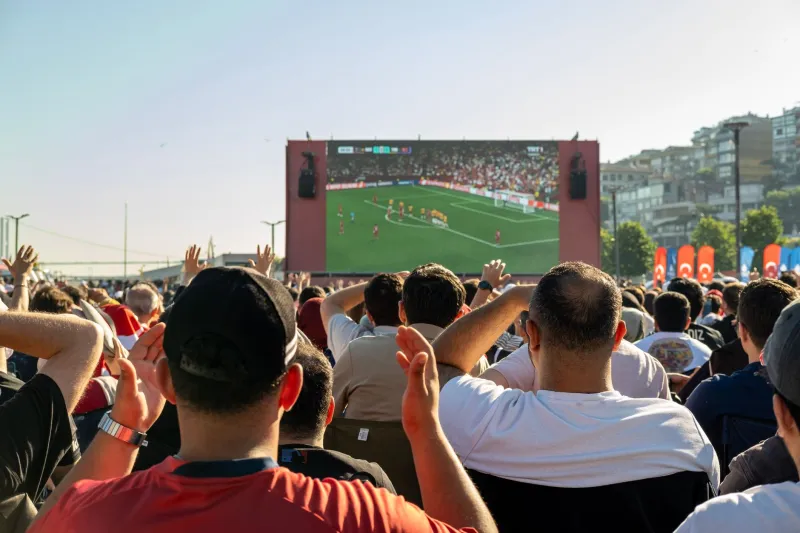
They're Not Just Watching. They're Working.
There's a version of the fan that the entertainment industry has been comfortable with for decades: the passive consumer who buys the ticket, streams the show, maybe picks up the merch. That version of fandom is easy to monetize and easy to understand. You make the thing, they consume it, everyone goes home.
That version of fandom is also increasingly rare.
What's actually happening — in Discord servers at 2 a.m., in TikTok video essays that run longer than the episodes they're analyzing, in fan wikis so detailed they function as secondary texts — is something much more active and much more interesting. Super-fans aren't just consuming creative work. They're processing it, extending it, arguing about it, and in many cases, making it better.
And if you look closely at what they're doing, you get a surprisingly clear picture of what entertainment itself is about to become.
The Forensics of Fandom
The academic term for this is "participatory culture," but that phrase undersells the intensity of what's actually happening. A better frame might be forensic fandom — the practice of treating a piece of creative work the way a detective treats a crime scene. Nothing is incidental. Everything is evidence. The goal is to extract maximum meaning from every available detail.
You can see this most clearly in fandoms built around work that deliberately rewards close attention: "Twin Peaks," "Severance," the entire Taylor Swift discography, "Westworld" in its first season, "Everything Everywhere All at Once." These aren't just popular properties — they're properties that generated obsessive secondary engagement because they gave fans something to actually work with.
The fan community around "Severance," for example, produced detailed timeline analyses, architectural breakdowns of the Lumon Industries set design, and theoretical frameworks for understanding the show's philosophical underpinnings — often before the show's second season confirmed or denied any of it. That's not passive consumption. That's intellectual labor performed out of love.
What creators and studios often miss is that this labor is a signal. When fans are doing that kind of deep excavation, they're telling you exactly what kind of engagement they want more of.
The Economics of Parasocial Investment
There's a financial dimension to super-fan behavior that's only recently started getting serious attention. The parasocial bond — the one-sided emotional relationship fans develop with creators, characters, and fictional universes — isn't just psychologically interesting. It's economically significant in ways that conventional audience measurement completely misses.
A casual viewer might stream a show and forget about it. A super-fan buys the book, the vinyl, the art print, the limited-edition collaboration drop. They fund the Kickstarter, back the Patreon, show up to the live event in another city. They write the fan fiction that keeps the property culturally alive between official releases. They recruit new fans through their own enthusiasm, functioning as an unpaid marketing infrastructure.
The economic contribution of super-fans is wildly disproportionate to their numbers. And the behavioral patterns that define them — the depth of engagement, the willingness to invest time and money, the impulse to extend and create rather than just consume — are leading indicators of how mainstream audiences will eventually behave as the tools for participation become more accessible.
What super-fans are doing now with relatively high friction — building wikis, writing long-form analysis, creating fan art — casual audiences will eventually do with frictionless tools. The fan behavior of today is the default audience behavior of tomorrow.
What the Obsession Patterns Are Actually Predicting
If you map what super-fans are consistently drawn to — the properties and creators that generate the deepest engagement — a few patterns emerge that feel like early signals for the broader industry.
First, incompleteness sells. The properties that generate the most obsessive fan engagement are almost never the ones with tidy, fully explained narratives. They're the ones with gaps, ambiguities, and open questions that invite speculation. Fans don't want everything handed to them. They want to participate in the meaning-making. This suggests that the future of entertainment involves deliberately leaving more space for audience interpretation — not because creators are lazy, but because co-creation is the most engaging format available.
Second, the text is just the starting point. For super-fans, the official work is raw material. Fan fiction, remix culture, theory crafting, alternate universe scenarios — these aren't supplements to the experience, they're central to it. The industry is slowly catching on, with some creators explicitly designing their work to be extensible, but most are still treating fan creation as a legal liability rather than a feature.
Third, community is the product. What keeps super-fans engaged isn't just the work itself — it's the community that forms around it. The shared language, the inside references, the social bonds formed through mutual obsession. This is why some properties remain culturally alive decades after their last official installment. The community has become self-sustaining.
The Early Warning System Nobody's Using Properly
Here's the frustrating part: all of this behavioral data exists. Fan communities generate enormous amounts of signal about what's working, what's resonating, what audiences are hungry for that they're not getting. The theory threads and the fan wikis and the TikTok video essays are, collectively, one of the most sophisticated pieces of market research in existence.
And most of the industry ignores it, or at best mines it for surface-level insights about what references to include in the next installment.
The creators who are paying real attention — who are treating fan behavior as a genuine feedback system rather than a vanity metric — are getting an enormous advantage. They're learning what questions their audiences want to sit with, what emotional needs the work is fulfilling, what directions the community is already pulling the story toward.
They're not just listening to what fans say they want. They're watching what fans actually do. And those are very different things.
The Future Is Already Being Written
Super-fan communities are, in a real sense, prototyping the future of entertainment. The participatory, extensible, community-centered model they've built around the work they love is where the broader culture is heading — just more slowly, and with less Discord.
The creators and studios that figure this out early — that treat their most devoted audiences not as consumers to be monetized but as collaborators to be listened to — are going to have a significant head start on what comes next.
The map is already there. Someone just has to be paying attention.