Never Finished, Never Forgotten: The Strange Power of Stories That Don't End
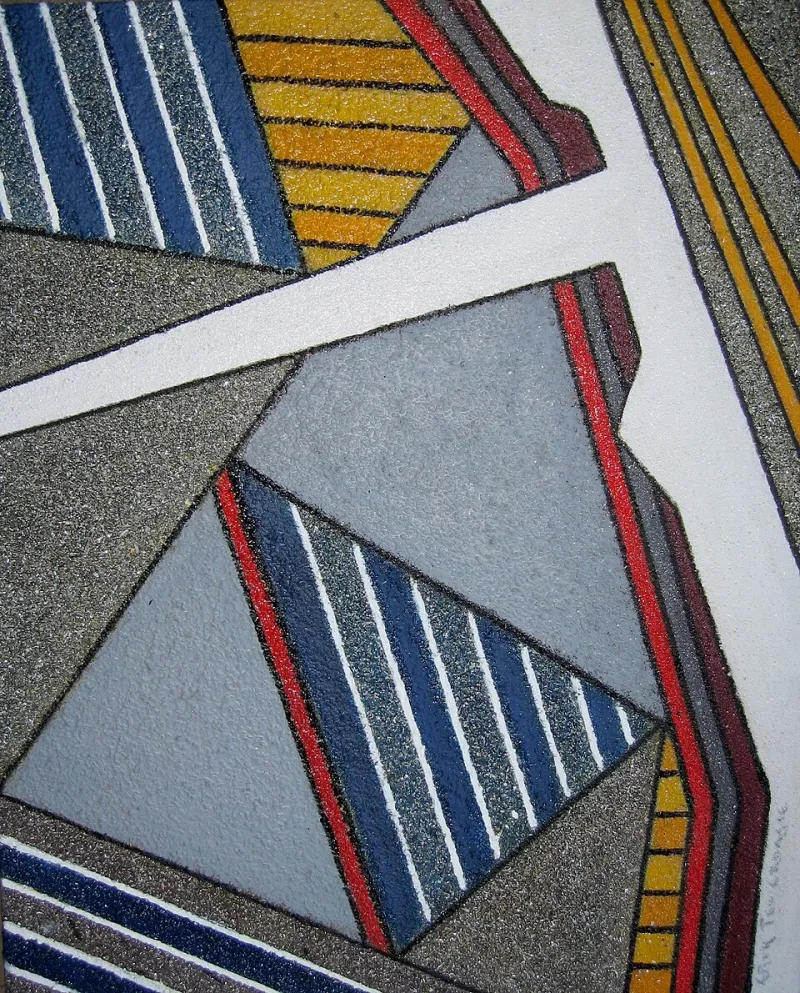
Photo: Erik Pevernagie .mw-parser-output .messagebox{margin:4px 0;width:auto;border-collapse:collapse;border:2px solid var(--border-color-progressive,#6485d1);background-color:var(--background-color-neutral-subtle,#fbfcff);color:var(--color-base,#20212
There's a particular kind of fan who never really leaves. You've probably met one — maybe you are one. They're still dissecting a song from 2009, still mapping out the geography of a fictional world that was never fully drawn, still convinced that the ending everyone else accepted wasn't actually the ending at all. These fans aren't stuck. They're doing exactly what the story trained them to do.
Because here's the thing nobody talks about enough: some of the most durable, most obsessive fanbases in American pop culture aren't built around stories that delivered. They're built around stories that withheld.
The Brain Loves a Problem It Can't Solve
Psychologists have a name for the itch that comes from unresolved information — the Zeigarnik effect. Basically, your brain holds onto incomplete tasks more tenaciously than completed ones. It's why you remember the conversation you never finished more clearly than the one that ended cleanly. Applied to storytelling, this means a narrative that closes every loop actually gives your brain permission to let go. A narrative that leaves a door cracked open? Your mind keeps reaching for the handle.
Creators — some intentionally, some accidentally — have figured out how to weaponize this. And the results are fanbases that don't just linger. They build.
The Album That Became a Conspiracy Board
Take Beyoncé's Lemonade. On the surface it's a complete artistic statement — a visual album with a clear emotional arc. But the deliberate vagueness around specific names, specific events, and the symbolic imagery scattered throughout turned it into a years-long interpretive project. Fan communities on Reddit and Tumblr didn't dissolve after the initial release. They expanded. New theories emerged. Old ones got revised. The album functioned less like a finished product and more like a primary source document — something to be studied, not just streamed.
That's not an accident. The creative decision to leave certain details unnamed, certain images unexplained, created a participatory layer that no amount of polished closure could have manufactured.
Interactive Worlds Built on Deliberate Gaps
In gaming, this phenomenon is practically a design philosophy. FromSoftware — the studio behind the Dark Souls series and Elden Ring — built an entire aesthetic identity around narrative fragmentation. Lore is buried in item descriptions. Characters speak in riddles. The world's history exists in pieces, scattered across environments that don't bother to explain themselves.
The result? Dedicated communities that have been reconstructing the lore of Dark Souls for over a decade. YouTube channels with hundreds of thousands of subscribers exist solely to theorize about narrative details the games never confirmed. The incompleteness isn't a flaw in the design — it is the design. Players aren't passive recipients of a story. They're active archaeologists, and that role creates a kind of investment that a straightforward narrative simply can't replicate.
The same dynamic plays out in indie games like Undertale and Hollow Knight, where ambiguous endings and unexplained character motivations have kept fan wikis, fan fiction archives, and online communities thriving years past the games' release windows.
Visual Art and the Story That Isn't There
It's not just narrative media. Visual artists who leave interpretive space in their work — who refuse to over-explain, who let the image breathe — tend to attract audiences that return repeatedly and bring others with them.
Consider the way certain illustrators and digital artists on platforms like Instagram or Patreon cultivate mystery around their worldbuilding. They post images of characters without context, environments without explanation, symbols that recur across pieces without ever being decoded. The comment sections fill up with theories. Followers tag their friends. The audience becomes a collaborative interpretive community, not just passive consumers.
This is the hidden economy of creative ambiguity: when you don't explain everything, your audience fills the gap with themselves. And once someone has invested their own imagination into your work, they have a stake in it that goes beyond casual appreciation.
When Incompleteness Is the Point — Not the Problem
There's an important distinction to make here. We're not talking about creators who simply ran out of time, lost funding, or abandoned a project. Accidental incompleteness has a different energy — it often generates frustration more than fascination, though sometimes that frustration also produces community (ask any fan of a canceled TV show).
What we're talking about is intentional withholding. The creator who ends a chapter at a moment of suspension rather than resolution. The musician who leaves a lyric ambiguous when a more explicit word was available. The game designer who hides the most important lore in a location most players will never find.
This is a craft choice. And it communicates something to the audience that explicit storytelling can't: your interpretation matters here. You are not just receiving this story. You are participating in it.
Why Wrapped-Up Endings Sometimes Kill the Community
Finales are fascinating case studies in this dynamic. When Game of Thrones delivered its controversial final season, the backlash was partly about quality — but a significant part of the frustration came from closure itself. For eight seasons, fan theories had been a living, breathing ecosystem. Speculation was the hobby. When the story ended, definitively and disappointing, that ecosystem collapsed. There was nothing left to theorize. The ambiguity that had powered years of community engagement was gone.
Contrast that with Twin Peaks, which ended its original run with one of the most unresolved cliffhangers in television history — and generated a fan community so enduring that David Lynch and Mark Frost were able to revive it twenty-five years later to an audience that had never stopped caring. The incompleteness had kept the story alive in the cultural imagination in a way that a tidy resolution never could have.
What This Means for Creators Right Now
If you're a creator — whether you're building a webcomic, dropping music, running an ARG, or developing a serialized fiction project — the takeaway here isn't "be lazy about endings." It's something more deliberate than that.
Leaving space is a skill. Knowing which questions to answer and which to let hang in the air is one of the harder things to learn. But the creators who master it tend to build something rarer than a big launch moment: they build permanence. Communities that stick around not because they're waiting for the next thing, but because the current thing still hasn't finished revealing itself.
In an attention economy that's constantly pushing toward the next scroll, the next release, the next distraction, a story that keeps people returning to the same page might be the most radical creative act available.
The signature Marive Kai keeps coming back to is this: imagination doesn't just receive stories. It completes them. And the creators who understand that are the ones whose work never really ends.