Evolve or Echo: The Real Reason Your Favorite Creators Keep Changing — And Why You Love Them For It
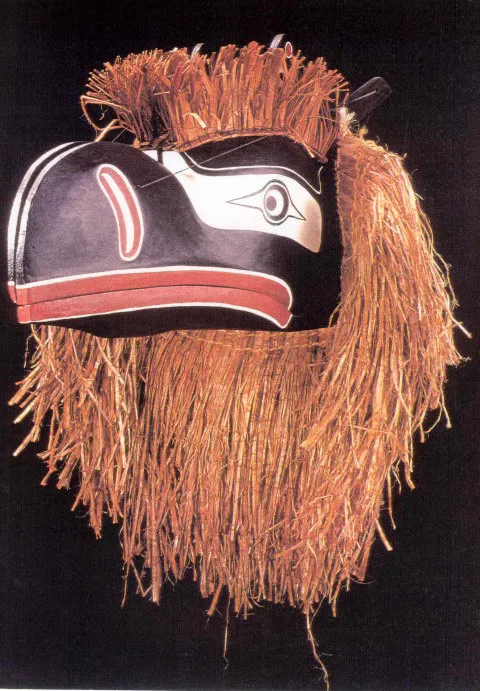
Photo: Oscar Matilpi, Kwakwaka'wakw Nation (or peoples, CC BY-SA 3.0, via Wikimedia Commons
The Moment You Realize They've Changed
It usually hits somewhere in the middle of a new album, a fresh collection drop, or a video that feels slightly off from what you expected. There's a beat — maybe two — where you think, this isn't what I came here for. And then, almost without permission, you're hooked all over again.
That's the signature shift in action. It's the deliberate, sometimes jarring, always intentional pivot that the most enduring creators make every few years. Not because they've lost the plot, but because they've found a new one.
The question worth sitting with isn't why do they keep changing — it's why do we keep following?
Stagnation Is a Slow Death
Here's the uncomfortable truth about creative formulas: they have an expiration date. A creator who figures out what works and then just... repeats it is essentially writing their own eulogy in real time. The audience might not leave immediately. But they'll start showing up out of habit rather than hunger, and there's a massive difference between the two.
Think about the arc of someone like David Bowie — an artist who reinvented himself so many times that entire generations had completely different entry points into his catalog. Ziggy Stardust fans and Let's Dance fans weren't necessarily the same people, but they were both fiercely loyal to their version of him. That's not an accident. That's architecture.
The same dynamic plays out in visual art, in film, in digital content creation. When an artist becomes a parody of their own aesthetic — leaning into the same references, the same palette, the same emotional register — they stop being a creator and start being a brand mascot. Comfortable. Predictable. Slowly irrelevant.
The Psychology Behind Following Someone Into the Unknown
So why do fans follow? Why does a loyal audience, one that found a creator during a specific era, choose to stick around when that era ends?
The short answer is that people aren't actually following the work — they're following the mind behind it. There's a parasocial intimacy that builds over time, a sense that you understand how this person sees the world. When that person pivots, the audience doesn't experience it as abandonment. They experience it as a peek behind the curtain. Oh, so this is who you're becoming.
Psychologists who study fan behavior point to something called identity fusion — the way a fan's sense of self becomes loosely entangled with a creator's public journey. When that creator evolves, it gives the audience implicit permission to evolve too. Following someone through their reinvention becomes its own kind of personal narrative. You're not just watching them grow; you're measuring your own growth against theirs.
That's a powerful bond. And it's one that a creator who stays static can never build.
The Risk Is the Point
Let's be honest — not every pivot lands. Some reinventions are genuinely confusing, poorly timed, or so jarring that they splinter a fanbase rather than expand it. The history of creative careers is littered with pivots that felt like stumbles in real time.
But here's what's interesting: even the stumbles tend to become part of the mythology. The weird experimental album that nobody liked in 2009 is now somebody's favorite deep cut. The visual rebrand that got roasted on social media is now considered ahead of its time. Failure, when it comes from genuine artistic ambition rather than calculated trend-chasing, has a way of aging differently than success.
The creators who earn long-term loyalty are almost always the ones willing to risk the stumble. Audiences are smarter than the industry gives them credit for — they can tell the difference between a creator who changed because they had to and one who changed because they wanted to. The former feels desperate. The latter feels alive.
What Makes a Pivot Feel Earned
Not all reinventions are created equal. There's a specific quality that separates a pivot that energizes an audience from one that alienates them, and it comes down to continuity of voice even when everything else changes.
The most successful creative evolutions don't erase what came before — they recontextualize it. You can hear the earlier work inside the newer work, the way you can hear a person's childhood in the way they laugh as an adult. The aesthetic might be completely different, but the underlying sensibility — the signature — remains intact.
That's what keeps people following. They're not chasing the old version; they're trusting that the same intelligence, the same instinct, the same particular way of seeing the world is still operating underneath the new surface. The style changed. The soul didn't.
Cultural Relevance Isn't Chased — It's Earned by Moving
There's a specific trap that mid-career creators fall into, especially in the age of algorithmic content. The data tells them what works. The engagement metrics reward consistency. The audience, in aggregate, seems to want more of the same. So they deliver more of the same, and the numbers hold steady, and slowly — almost imperceptibly — the work loses its electricity.
The creators who stay culturally relevant over decades are the ones who treat their own data with a certain healthy suspicion. They understand that metrics measure what already happened, not what's possible. They're willing to disappoint the algorithm in service of the work.
That's a harder choice than it sounds in an era where visibility is everything. But the payoff is an audience that's genuinely engaged rather than passively consuming — people who show up because they're curious, not just because your content is in their feed.
The Audience Is Also Evolving
Here's one more thing worth naming: the fans who follow a creator through multiple reinventions aren't the same people they were when the relationship started, either. The teenager who found an artist in 2015 is a different person in 2025, and they need their creative touchstones to grow with them.
When a creator evolves, they're not just serving their own artistic growth — they're meeting their audience in a new place. It's a conversation across time, a way of saying I see where you are now, and I'm here too.
That's the real signature behind the shift. Not just the courage to change, but the wisdom to understand that staying exactly the same is the only move that would truly leave everyone behind.